X-ray Astronomy
History
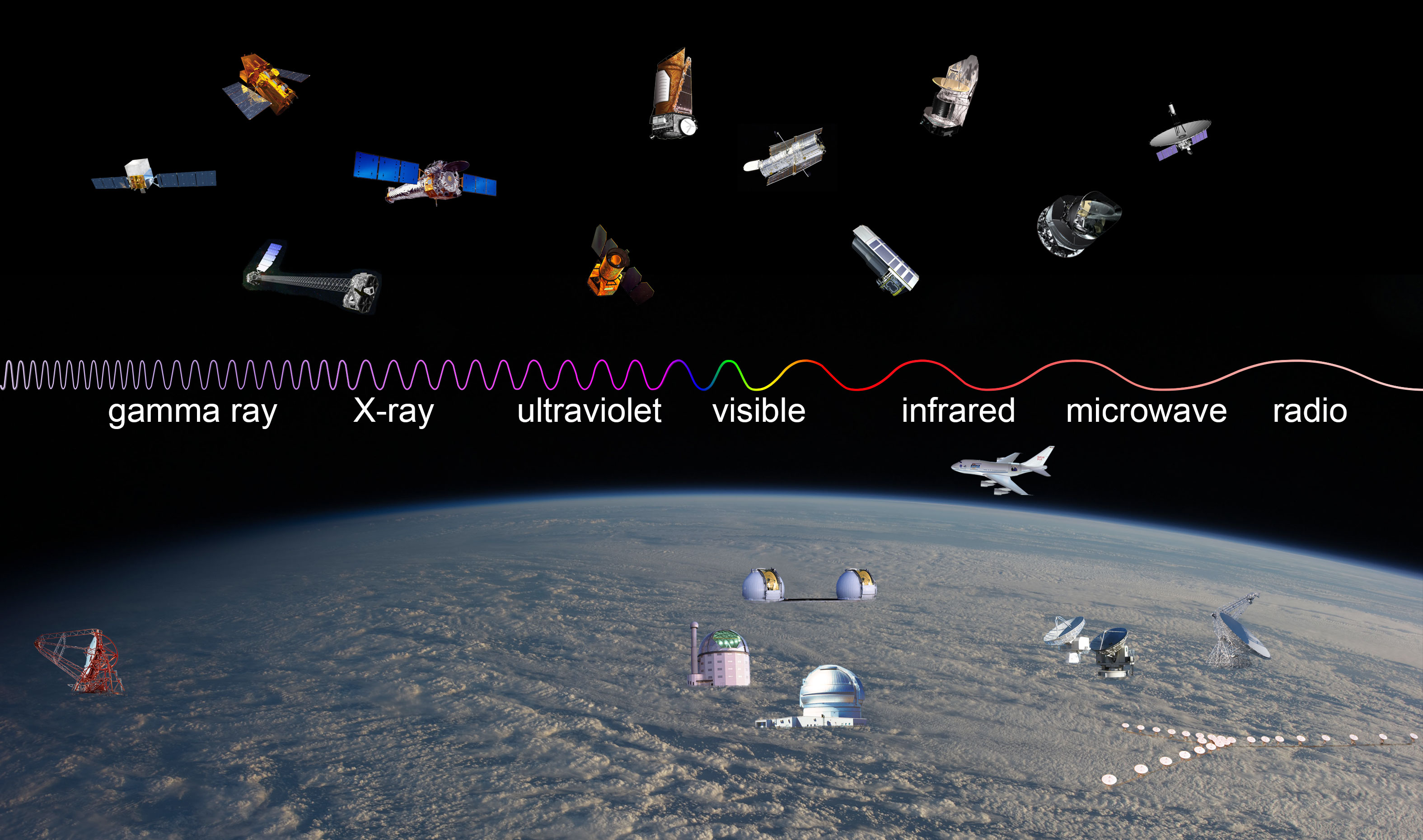
The study of astronomical objects at the highest energies of X-rays and
gamma rays
began in the early 1960s. Before then, scientists knew only that
the Sun was an intense source in these wavebands. Earth's
atmosphere absorbs most X-rays and gamma rays, so rocket flights that
could lift scientific payloads above Earth's atmosphere were needed.
The first rocket flight to successfully detect a cosmic source of X-ray
emission was launched in 1962 by a group at American Science and
Engineering (AS&E). The team of scientists on this project included
Riccardo Giacconi, Herb Gursky, Frank Paolini, and Bruno Rossi. This
rocket flight used a small X-ray detector, which found a very bright
source they named Scorpius X-1, because it was the first X-ray
source found in the constellation Scorpius.
In the 1970s, dedicated X-ray astronomy
satellites, such as Uhuru, Ariel 5,
SAS-3, OSO-8 and HEAO-1,
developed this field of science at an astounding pace.
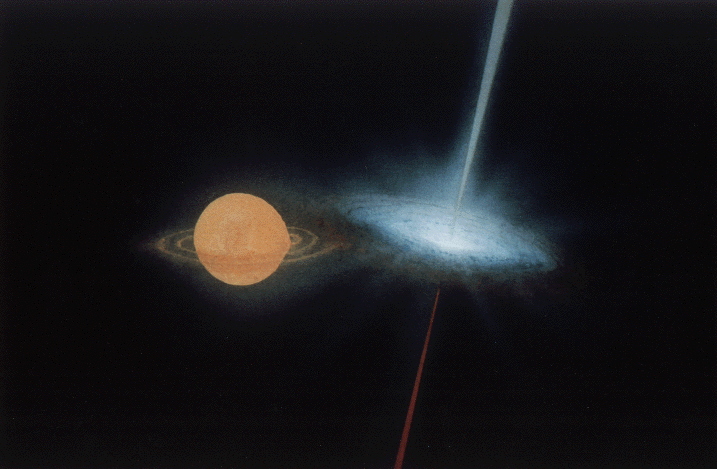
Scientists hypothezised that X-rays from stellar sources in our galaxy were
primarily from a neutron star
in a binary
system with a normal star. In
these "X-ray binaries," the X-rays originate from material traveling
from the normal star to the neutron star in a process called accretion.
The binary nature of the system allowed astronomers to measure the mass
of the neutron star. For other systems, the inferred mass of the X-ray
emitting object supported the idea of the existence of black holes,
as they were too massive to be neutron stars. Other systems
displayed a characteristic X-ray pulse, just as pulsars had been found to do in the radio regime,
which allowed a determination of the spin rate of the neutron star.
Finally, some of these galactic X-ray sources were found to be highly
variable. In fact, some sources would appear in the sky, remain bright
for a few weeks, and then fade again from view. Such sources are
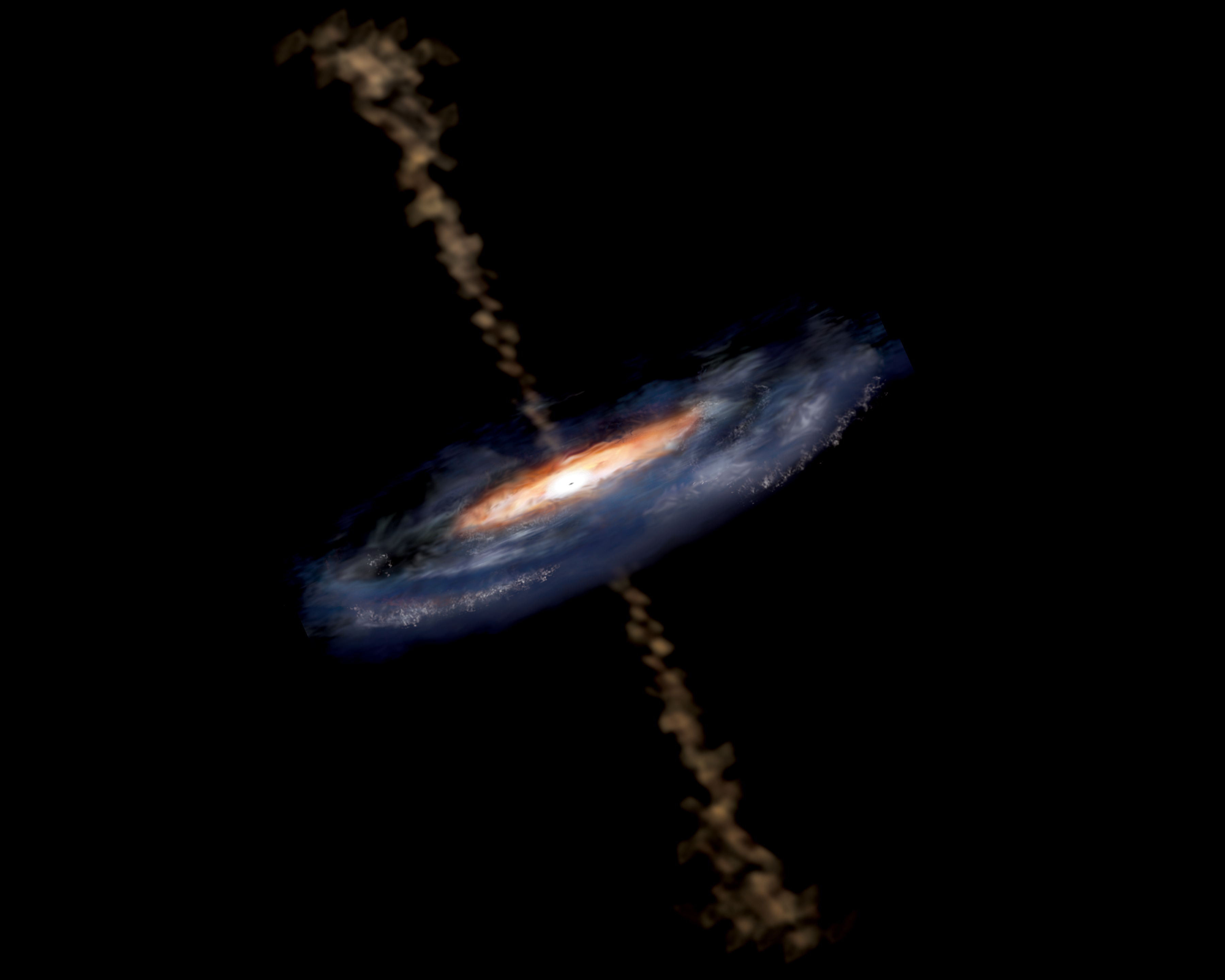
called X-ray transients. The inner regions of some galaxies were
also found to emit X-rays. The X-ray emission from these active
galactic nuclei is
believed to originate from ultra-relativistic gas near a very massive
black hole at the galaxy's center. Lastly, a diffuse X-ray emission was
found to exist all over the sky.
Today, the study of X-ray astronomy continues to be carried out
using data from a host of satellites that were active from the 1980s to
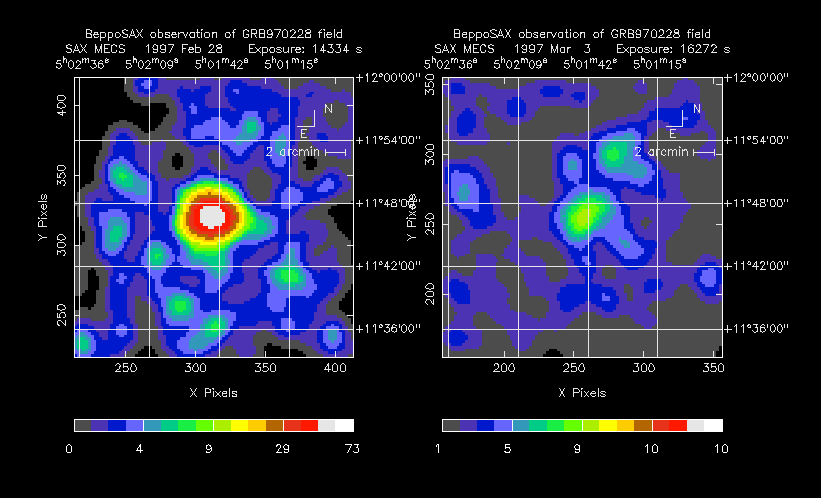
the early 2000s: the HEAO series, EXOSAT, Ginga, RXTE, ROSAT, ASCA, as well as BeppoSAX,
which detected the first afterglow of a gamma-ray burst (GRB).
Data from these satellites continues to aid our further understanding of the
nature of these sources and the mechanisms by which the X-rays and
gamma rays are emitted. Understanding these mechanisms can in turn
shed light on the fundamental physics of our universe. By looking at the sky with X-ray and
gamma-ray instruments, we collect important information in our attempt
to address questions such as how the universe began and how it evolves,
and gain some insight into its eventual fate.
Current missions
One X-ray mission that continues to contribute to the data available to
researchers is the Chandra X-ray Observatory (CXO),
NASA's current flagship mission for X-ray astronomy. It was
launched in July 1999, and is designed to detect X-rays from very hot,
high-energy regions of the universe, such as galaxy clusters, matter
surrounding black holes and stars that have exploded.
Another example is Suzaku
launched by Japan in July 2005. It was jointly developed by the
Institute of Space and Astronautical Science of the Japan Aerospace
Exploration Agency (JAXA) and NASA's Goddard Space Flight Center, and
recently
observed
Hanny's Voorwerp.
Europe also has a stake in the X-ray observation field, in the form of
the European Space Agency's (ESA) X-ray Multi-Mirror Mission, called
XMM-Newton.
Like Chandra, it was launched in 1999. It has recently been used to
observe ultraluminous X-ray sources and find evidence of
intermediate-mass black holes.
Future of X-ray astronomy
Just like the current array of X-ray observatories has provided a
glimpse into the cosmos better than the previous equipment could have,
the next generation of telescopes will offer scientists a far more
advanced view of targets than anything available before. One example is
GEMS,
which stands for "Gravity and Extreme Magnetism SMEX (Small
Explorers)." The observatory is part of NASA's Explorer program. GEMS
will measure the polization properties of X-rays emitted by pulsars,
supernova remnants and and the regions aournd black holes. This will
provide a new means for studying these sources, for example, exploring
the shape of space that has been distorted by a spinning black hole's
gravity. This will be possible because the GEMS is many times more
sensitive and will provide more precise data than previous X-ray
polarization experiments.
GEMS will study the magnetic fields around pulsars and magnetars,
as well as how cosmic rays are accelerated by shocks in supernova
remnants. GEMS is scheduled to be launched in 2014.
The IXO (International X-ray Observatory) is a joint venture between
NASA, ESA and JAXA, combining the mission concepts of NASA's
Constellation-X mission and ESA/JAXA's XEUS mission. Like GEMS, IXO
will have far better imaging capabilities than its predecessors. The
observatory's advanced equipment would improve the effective area
available for high-resolution spectroscopy, and the improvements in
precision would allow scientists to map
supermassive black holes from very early in the development of the
universe. More possible targets for the IXO include neutron stars, to
show how matter reforms under crushing pressures, and spinning black
holes. The projected launch date for IXO is planned for 2021, with
an expected lifespan of five to ten years.
Targets of X-ray Astronomy Observations
Below are some topics related to X-ray astronomy. Some of these include
links to science groups that are
actively
pursuing research in these fields.
Last Updated: December 2010
|