Activity 1: Using Timing Data to Understand Periodic Sources.
There are many objects in the sky whose appearances change with time. Others
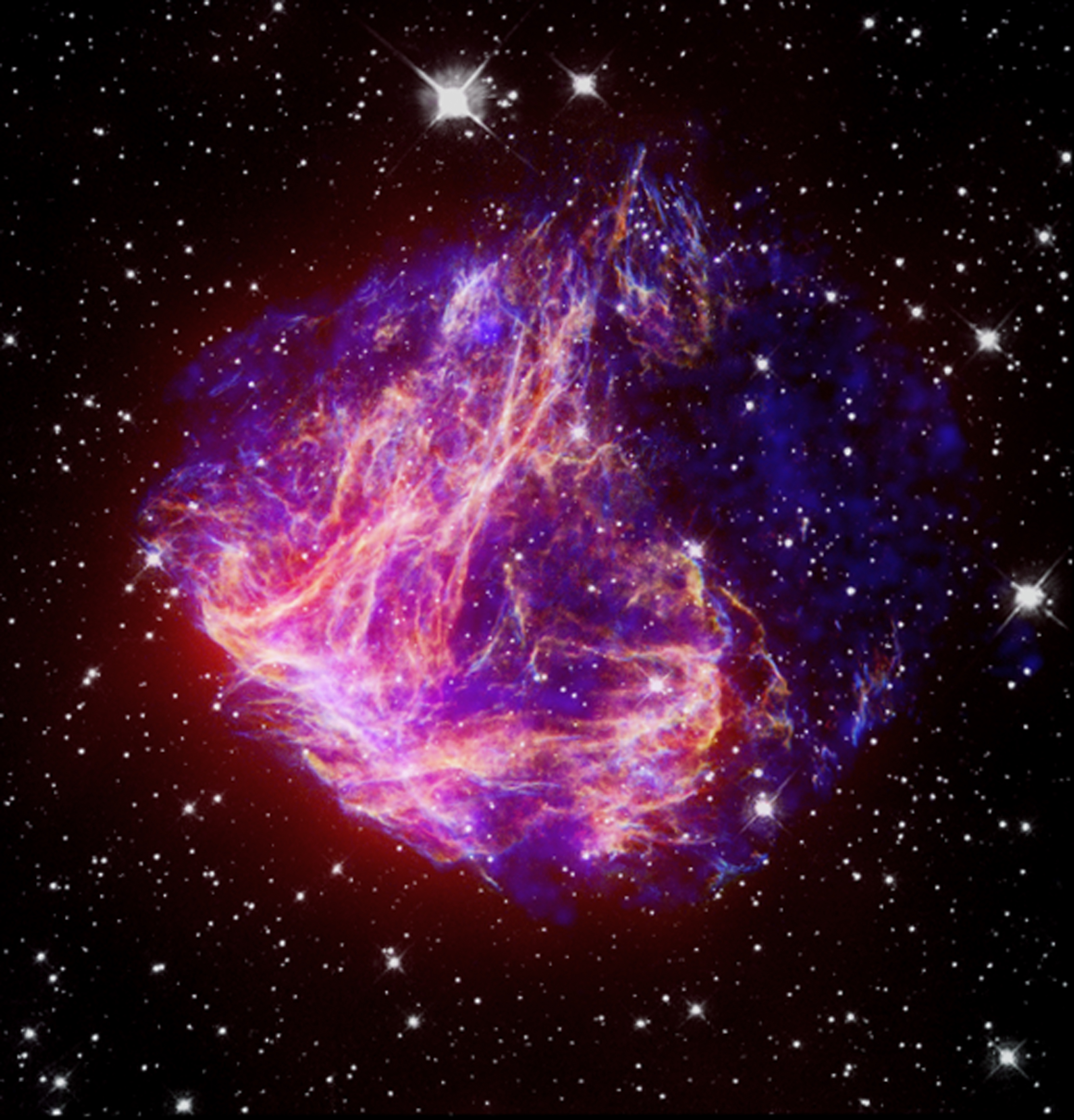
change over time because they are evolving, for example supernovas, stars
that explode and then fade over time. Other
change periodically, with a pattern of brightness and dimness that repeats again and again. Examples include double or binary stars, and pulsars and neutron stars. The period of such a system is the time it
takes to return to the same level of brightness or dimness.
We learn about systems that vary periodically with time by studying data
collected from the same source over time (many times the period of the pattern).
Data is displayed in the form of a lightcurve. A lightcurve has time as its
X-axis (units of seconds, hours, or days, for example) and some measure of
brightness, intensity or counts received as the Y-axis. What we can learn from a
lightcurve, and what does the lightcurve from a periodic source look
like?
In this guided activity, you will learn how to use Hera's suite of timing
analysis tools to find the orbital period of a system where a rotating neutron
star is in orbit with a supergiant B star. But before starting, try these
exercises to help familiarize you with periodic sources you may see in everyday
life.
Exploration of Periodic Sources in Everyday Life
Let's look at the light curves from a car. The light from a car's
headlights doesn't change over time, but a car's turn signal is a good
example of a source of light that varies in a regular pattern with
time. |
Exercise 1
- The following table represents the brightness of headlights over time.
|
|